Yarn-dye or piece-dye: how the colour gets into the cloth
Two cloths can look identical on a hanger and behave completely differently in production. The difference is decided before the loom, not after.
Almost every quality we sell is one of three things: piece-dyed, yarn-dyed, or top-dyed. The names sound technical. The consequence is practical — it decides your minimum, your lead time, and whether the second bulk matches the first.
Piece-dye: colour after weaving
Grey cloth goes into a dye bath and comes out coloured. It is the cheapest route and the fastest, because the mill can hold greige stock and dye to order. The risk is the bath itself: shade drifts between batches, and a repeat order six months later will not match the first unless you keep a retained sample and a recipe.
Piece-dye is the right answer for solid colours in volume. It is the wrong answer for a stripe.
Yarn-dye: colour before weaving
The yarn is dyed first, then woven. Checks, stripes and jacquards are almost always yarn-dyed, because the pattern is built from coloured threads rather than printed or dyed onto a surface.
The advantage is that the colour goes all the way through. Cut the cloth and the reverse is as sound as the face; the stripe does not fade at a fold. The cost is a much higher minimum — every colour in the design is a separate yarn lot.
Top-dye: colour in the fibre
Dyed at the loose-fibre stage, before spinning. It gives the deepest penetration and a slightly heathered, soft-edged look that surface dyeing cannot imitate. It is the route for melange and for colours that must survive heavy washing.
How to tell them apart on the table
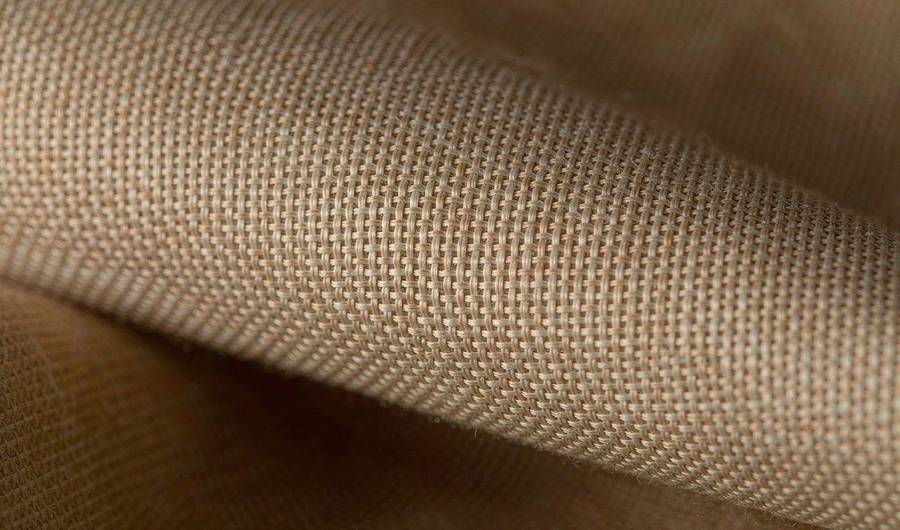
- Cut a small square and look at the cut edge — if the yarns are individually coloured, it is yarn-dyed.
- Unpick a single thread from a solid ground — if the core is pale, it was piece-dyed.
- Hold it against a light — top-dyed cloth reads slightly cloudy rather than flat.
The cheapest cloth is the one you do not have to re-order because the shade drifted.
When a buyer sends us a reference, the first question we ask is not "what colour" but "is this a solid or a pattern". That single answer sets the entire costing.
Working on a quality?
Send the reference and the end use. We will send back cloth, not a picture of cloth.